Start with vehicle count
One-car, two-car, and three-car garages live in different width ranges, but the real question is how much clearance you want once the vehicles are inside. A tight fit may work on paper and still feel frustrating every day.
Decide whether storage matters now or later
Many buyers think they only need room for vehicles until bicycles, seasonal items, lawn equipment, and household overflow begin collecting along the walls. Depth is often what separates a basic garage from a genuinely useful one.
Know where 24×24 fits
24x24 remains one of the most practical detached garage footprints because it balances two-car parking with everyday usability, side clearance, and manageable construction cost.
It works especially well when you want a classic two-car garage without paying for a larger workshop footprint. A typical and highly efficient option is a 24×24 garage plan, which balances space, cost, and everyday use better than many minimum-size two-car layouts.
When the size decision is made, the next step is choosing a plan package. The available 24×24 detached garage plans include Builder and Pro options, delivered as PDF plan sheets through Gumroad checkout.
Need the chart instead?
Go straight to the garage size chart for a quick comparison of 20×20, 24×24, 24×30, and other standard widths, depths, and common use cases.
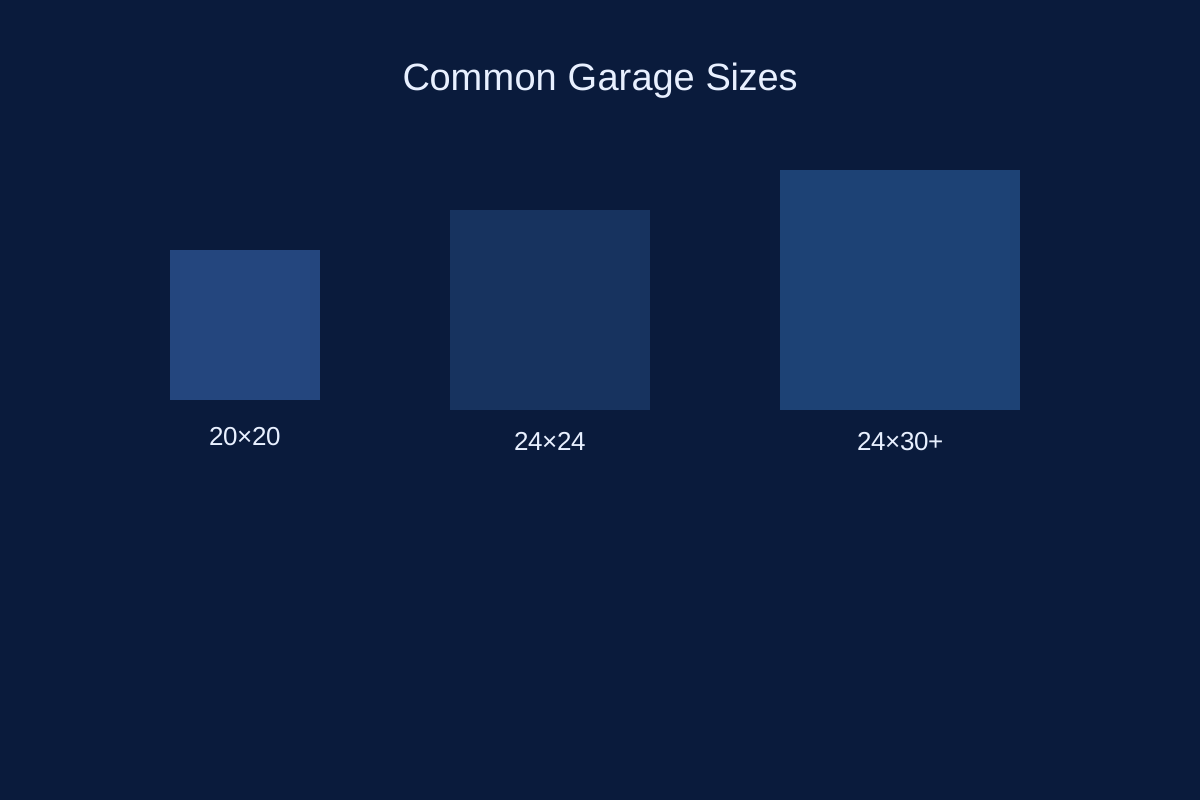
Quick 20×20, 24×24, and 24×30 Comparison
| Size | How it usually feels | Best use | Plan status |
|---|---|---|---|
| 20×20 | Tight | Compact two-car parking with limited storage | Comparison only |
| 24×24 | Practical | Two vehicles, basic storage, and better daily clearance | Builder and Pro Sets available |
| 24×30 | More flexible | Two vehicles plus deeper storage or workbench space | Interest list only |
If 24×24 is the right balance, the next step is the available 24×24 detached garage plan package. If the extra depth of 24×30 is important, use the interest page instead of buying the current plan set.
Use 24x24 as the baseline for practical two-car garage plans
For many homeowners, 24x24 is the point where a two-car garage stops feeling like a bare minimum box and starts working as useful daily space. Use this size as the baseline before deciding whether you need the added depth of 24x30.
Ready to move from sizing to plans?
If the guide points you toward a practical two-car footprint, start with the available 24×24 detached garage plan package. If the extra depth of 24×30 is the sticking point, register your interest so future plan development follows real demand.